A surge protector comparison can get confusing fast because the products often look alike on the shelf. A basic power strip, a plug-in surge protector, and a whole-home surge protective device may all offer extra outlets, but they do very different jobs. Buying the cheapest option can leave expensive electronics exposed, while buying the highest joule rating without considering the rest of your electrical system can create a false sense of security.
For Central Florida homes and businesses, surge protection is not a minor add-on. Lightning activity, utility switching, air conditioners cycling on and off, and large appliances can all create voltage spikes. Most are not the dramatic, one-time event people picture. Smaller surges can gradually wear down circuit boards in TVs, refrigerators, computers, smart appliances, Wi-Fi equipment, and HVAC controls.
The right choice usually is not whole-home protection or plug-in protection. It depends on what you are protecting, how much it is worth, and whether the electrical panel is ready for the work. Here are the straight answers.
Surge Protector Comparison: Start With the Three Main Types
Standard power strips
A power strip gives you more places to plug in equipment. That is all it may do. Many basic strips have an on/off switch and overload protection, but they do not divert harmful surge energy away from connected devices.
This distinction matters. A resettable breaker in a power strip can help prevent the strip itself from overheating if it is overloaded. It does not mean the strip protects a computer or television from a voltage spike. Check the package for a listed surge rating and recognized safety certification before assuming it offers surge protection.
Use a basic power strip only where convenience is the goal and the connected items are low-value. Never use it as a permanent solution for high-draw equipment such as space heaters, window AC units, refrigerators, or other major appliances.
Point-of-use surge protectors
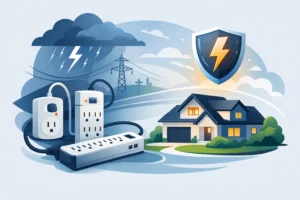
Point-of-use protectors are the plug-in strips and wall units used behind televisions, desk setups, entertainment centers, and network equipment. They are designed to absorb or redirect excess voltage before it reaches the equipment plugged into them.
They are a smart fit for concentrated groups of sensitive electronics. A quality unit can protect a TV, sound system, streaming device, game console, router, and modem in one location. For a home office, it can help protect monitors, a desktop computer, docking station, and printer.
The trade-off is coverage. A plug-in protector only protects what is connected to it. It does not protect hardwired equipment, such as an air handler, range, garage door opener, pool equipment, or the circuit boards inside many modern appliances. It also cannot protect every outlet in the home.
Whole-home surge protectors
A whole-home surge protective device is installed at or near the electrical panel. It is the first line of defense for surges entering through the electrical service. Unlike a plug-in strip, it protects the circuits feeding the house or business, including equipment that cannot be plugged into a strip.
For most homeowners, this is the protection that makes the biggest difference. It helps reduce exposure across the electrical system, from kitchen appliances to HVAC controls and smart-home devices. It is especially practical after a panel upgrade, during a renovation, when installing an EV charger, or when replacing an aging electrical panel.
Whole-home protection is not a magic shield against a direct lightning strike. No electrician should promise that. A nearby or direct strike can cause damage through electrical, cable, phone, or data lines and may overwhelm protective equipment. But a properly selected and installed device can significantly reduce the risk from common everyday surges and many external events.
What the Ratings Actually Mean
Marketing labels can make one unit look obviously better than another. The details tell a more honest story.
Joule rating describes how much surge energy a point-of-use protector may handle before it wears out. More joules can be useful, particularly for valuable electronics, but it is not the only number that matters. A high-joule strip installed on a poorly grounded outlet is not a complete protection plan.
Clamping voltage is the voltage level at which the device starts diverting excess energy. Generally, a lower clamping voltage means the protector responds sooner. Compare units in the same category, not just one number taken out of context.
UL 1449 listing matters because it indicates the product has been evaluated as a surge protective device. For whole-home equipment, use a device intended for panel installation and have it installed according to manufacturer instructions and local code requirements. This is not the place for improvised wiring or an online bargain with unclear documentation.
Protection modes refer to the paths a surge protector can cover, such as line-to-neutral, line-to-ground, and neutral-to-ground. This is more technical than most property owners need to study, but it is one reason professional-grade panel devices are different from a basic outlet strip.
A good surge protector should also have a clear status indicator. Surge components do not last forever. If the protection light goes out or the device signals a fault, the outlets may still work while the surge protection does not. That device needs attention, not wishful thinking.
Why Grounding and Installation Matter
Surge protectors work by sending excess voltage away from the equipment they protect. That depends on a properly grounded electrical system. If grounding, bonding, panel connections, or outlet wiring are compromised, the best protector on paper cannot perform as intended.
This is why an older home deserves more than a quick plug-in purchase. Two-prong outlets, outlets with an open ground, flickering lights, breaker problems, frequent tripping, or an outdated panel are signs to address the electrical system first. No upselling, no runaround – it is simply the order of operations required for protection to work correctly.
At the panel, installation quality matters too. Lead length, breaker compatibility, panel capacity, correct connections, and manufacturer requirements all affect performance. Whole-home surge protection should be installed by a licensed electrician who can assess the existing panel rather than treating every home as identical.
When You Need Both Types of Protection
For many properties, layered protection is the practical answer. A whole-home device handles the broader electrical system, while point-of-use protectors add a closer layer for sensitive electronics.
Consider both when you have a home office, a media room, smart appliances, newer HVAC equipment, an alarm system, or valuable networking gear. Businesses should also think beyond computers. Point-of-sale equipment, security cameras, access controls, networking racks, digital signage, and specialized equipment can all be vulnerable to a surge-related failure.
Not every outlet needs a premium surge strip. Put them where sensitive, replaceable-but-expensive electronics are connected. Put whole-home protection at the panel to cover the larger picture. That is usually a better use of money than filling the house with low-cost strips and hoping they are still functional years later.
Common Mistakes That Leave Equipment Exposed
The first mistake is confusing an overload-protected power strip with a surge protector. The second is daisy-chaining strips together to create more outlets. That can overload circuits, create a fire risk, and violates the instructions on most products.
Another common problem is protecting the TV but ignoring the cable, antenna, Ethernet, or phone line connected to it. Surges can travel through more than the electrical wiring. For a valuable system, consider the full path into the equipment.
Finally, do not treat a surge protector as a lifetime purchase. Replace plug-in units after a known major surge event, when their indicator shows protection is lost, or when they are old enough that their history is unknown. Whole-home devices also need their status indicators checked periodically.
A Practical Choice for Central Florida Properties
If you rent and cannot modify the panel, use quality point-of-use surge protectors for electronics you own and ask the property owner about whole-home protection. If you own the home, start with the panel and grounding condition, then add plug-in protection where it makes sense. If you manage a commercial property, build surge protection into electrical upgrades instead of waiting for a failed controller or network switch to interrupt operations.
VoltIQ Electrical Contractor can evaluate the panel, explain what type of protection fits the property, and provide upfront pricing before work begins. You get direct answers from a local licensed and insured team, not a call center and not a vague estimate.
The best time to address surge protection is before the next storm, utility event, or unexplained equipment failure gives you a reason. A quick electrical assessment now can be far less frustrating than replacing the devices that keep your home or business running.