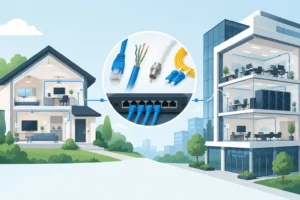
A home can have lights that work, outlets that test live, and a panel that looks perfectly normal while a problem sits behind a wall. That is why copper versus aluminum wiring is more than a material debate. The wiring type, its age, the connections installed with it, and the condition of the electrical panel all affect safety.
For most homeowners, the question starts after an inspection report, an insurance question, a renovation plan, or a warm outlet. Straight answer: copper is generally the preferred conductor for interior branch circuits, while aluminum can be a safe and practical choice for properly installed larger feeders and service conductors. Older aluminum branch-circuit wiring deserves professional attention, not panic and not a quick DIY fix.
Copper Versus Aluminum Wiring: The Real Difference
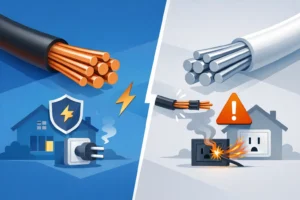
Copper and aluminum both carry electricity. The difference is how they perform over time and what an electrician must account for during installation.
Copper is a better electrical conductor by volume. It is also stronger, less likely to creep or deform under pressure, and more forgiving at termination points such as outlets, switches, breakers, and splices. Those characteristics make it the standard choice for most modern residential branch wiring – the circuits that serve your receptacles, lights, appliances, and other loads throughout the building.
Aluminum is lighter and usually costs less than copper. Because it does not conduct electricity as efficiently, a larger aluminum conductor is needed to carry the same load as a smaller copper conductor. That is not automatically a drawback. For large service entrance cables and feeders, aluminum is widely used and can be safe, code-compliant, and cost-effective when sized correctly and terminated with equipment listed for aluminum conductors.
The concern comes from the details. Aluminum expands and contracts more with temperature changes, can oxidize at exposed connections, and is softer than copper. If an older aluminum wire is connected to a device not designed for it, or if a connection becomes loose, resistance and heat can build up. Heat at a connection is never something to ignore.
Why Older Aluminum Branch Wiring Gets Attention
Many homes built or remodeled roughly between the mid-1960s and early 1970s used solid aluminum wiring for 15- and 20-amp branch circuits. At the time, aluminum was less expensive and copper prices were high. The material itself was not the whole problem. The devices, connection methods, and installation practices of that period did not always account for aluminum’s movement and oxidation characteristics.
Over decades, a poor connection can loosen further. A loose connection may arc, discolor a device, damage insulation, or create enough heat to become a fire risk. This is why a home with older aluminum branch wiring may raise concerns during a sale, insurance review, or renovation.
That does not mean every house with aluminum wiring needs immediate full rewiring. Some systems have performed without issue for years. But age alone is not proof that everything is safe. A licensed electrician needs to evaluate the wiring type, connection points, panel, load demands, and any prior repairs before recommending the right path forward.
Copper Is Usually Best for Interior Circuits
For new outlets, lighting circuits, kitchen remodels, additions, and most electrical repairs, copper wiring is typically the straightforward choice. It works with common devices and connectors, handles repeated termination well, and gives homeowners and future buyers fewer questions down the road.
Copper also makes sense when an older circuit is being extended or substantially modified. Mixing conductor types without the correct connectors and methods is not acceptable. A copper pigtail added to aluminum wiring, for example, must be installed using a listed remediation method. Twisting the wires together under a standard wire nut is not a repair. It can create exactly the type of weak connection that causes trouble later.
Copper costs more upfront, particularly on larger projects. Still, on interior branch circuits, its reliability and compatibility usually make that cost worthwhile. The goal is not to use the cheapest material on the invoice. The goal is a safe circuit that performs correctly for years without mystery heat, flickering lights, or repeat service calls.
When Aluminum Is Still a Good Choice
Aluminum remains common on larger conductors feeding the main panel, a subpanel, or certain high-load equipment. Modern aluminum building wire is not the same as the older solid aluminum branch wiring that concerns many homeowners. Current aluminum conductors are manufactured to modern standards, and electrical equipment is often clearly marked for copper, aluminum, or both.
A properly engineered and installed aluminum feeder can be an excellent value. It must be the correct size, protected by the correct breaker, installed in the appropriate raceway or cable method, and terminated to manufacturer specifications. That includes proper torque at lugs. “Tight enough” is not a measurement. Electricians use the listed torque requirements because overtightening and undertightening can both damage a connection.
For commercial buildings, large residences, detached garages, and service upgrades, aluminum may be the sensible material choice. It depends on the design, load calculation, equipment ratings, and local code requirements.
Warning Signs You Should Not Brush Off
Electrical wiring rarely announces a problem politely. If any device or circuit shows warning signs, schedule a professional diagnostic rather than replacing parts until the symptom disappears.
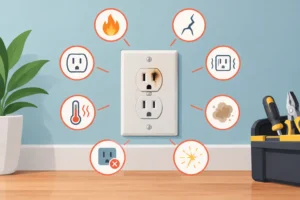
Pay attention to recurring flickering or dimming lights, outlets or switches that feel warm, buzzing or crackling sounds, a burning-plastic smell, discolored cover plates, breakers that trip repeatedly, or appliances that seem to lose power intermittently. These signs can result from several issues, including overloaded circuits, damaged devices, panel problems, or loose connections. Aluminum wiring is one possible factor, especially in an older home, but it should not be assumed without an inspection.
If you smell burning, see smoke, notice sparking, or have an outlet that is hot to the touch, shut off power to that circuit if you can do so safely and call for urgent electrical service. Do not remove the outlet cover to investigate. The visible device may be only part of the problem.
What an Electrician Looks For
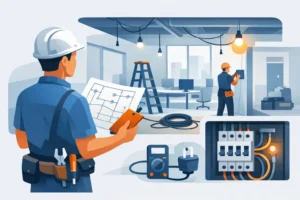
A proper evaluation is more than looking at one outlet. The electrician identifies the conductor material, checks the panel and accessible junction points, confirms whether devices are rated for the wire present, and looks for signs of overheating or improper previous work.
They may also review circuit loading, grounding and bonding, breaker sizing, service capacity, and the condition of the electrical panel. This matters because older aluminum wiring is often found in homes that may also have aging panels, added loads, or renovations completed by different people over many years.
From there, the recommendation may be targeted repair, an approved connection remediation method, circuit replacement, panel work, or full rewiring. No upselling, no runaround. The right answer should match the actual condition of the home and the scope of your plans.
Repair, Rewire, or Leave It Alone?
There is no one answer for every property. If a home has older aluminum branch wiring that is in good condition, has been properly remediated where needed, and is not being extensively renovated, a targeted approach may be appropriate. Documentation of the inspection and repairs can also be useful for property owners, buyers, and insurers.
If there are multiple overheating connections, widespread improper devices, brittle insulation, extensive remodeling plans, or recurring electrical symptoms, rewiring affected circuits may be the better long-term decision. A full rewire is a larger project, but it can make sense when walls are already open for renovation or when the existing system no longer supports how the home is used.
For landlords and business operators, planned electrical work is usually less disruptive and less expensive than an emergency response after a failure. For homeowners, the same principle applies: address the condition before it turns into a weekend without power or a safety concern.
Get Straight Answers Before You Make Changes
Do not let a home inspection note about aluminum wiring push you into a rushed decision, and do not let someone dismiss it without checking the system. Ask what type of aluminum wiring is present, where it is located, whether the devices and connectors are listed for it, and what repair options fit the property.
At VoltIQ Electrical Contractor, the local team can inspect the issue, explain the findings in plain language, coordinate permitted work when required, and give you pricing before work begins. You are talking to a local electrician, not a call center.
The best next step is simple: treat warm outlets, flickering circuits, and unknown older wiring as a reason to get clear information. A careful inspection now can protect your property, your schedule, and the people who depend on the building every day.