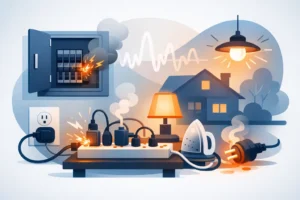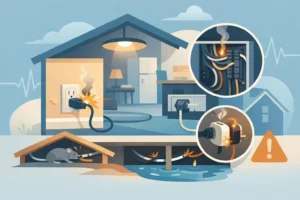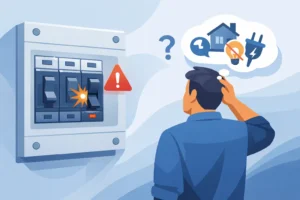
A breaker that trips once after a storm may be a one-time event. A breaker that trips every time the microwave, air fryer, space heater, or hair dryer runs is your electrical system telling you something is wrong. Knowing the five signs of overloaded circuits can help you act before a nuisance interruption turns into damaged wiring, lost power, or a fire risk.
An overloaded circuit happens when connected equipment draws more electricity than the circuit is designed to carry. Modern homes use more power than many older electrical systems were built for, especially when rooms have added televisions, gaming systems, office equipment, portable AC units, EV chargers, and high-demand kitchen appliances. The fix is not always a full panel replacement. Sometimes it is a dedicated circuit, a repaired connection, or a better distribution of loads. A licensed electrician can determine which one applies without guesswork.
Five Signs of Overloaded Circuits You Should Not Ignore
1. Breakers trip repeatedly
A circuit breaker is designed to shut off power when current gets too high. If it trips, resets, and trips again when you use the same appliances, do not keep forcing it back on. Repeated resets can mask the reason it is tripping and may put stress on the breaker and wiring.
Start by unplugging or turning off the items on that circuit. If the breaker stays on with a lighter load but trips as soon as several devices are running, overload is a likely cause. Kitchens, garages, laundry areas, home offices, and older bedrooms are common trouble spots because people often add more equipment than the original circuit was intended to support.
That said, a tripping breaker does not automatically mean overload. It can also point to a short circuit, a ground fault, a failing appliance, moisture intrusion, or a worn breaker. That is why the right answer is diagnosis, not a bigger breaker. Installing a higher-amp breaker on undersized wiring can create a serious fire hazard.
2. Lights dim or flicker when an appliance starts
If lights dip when the refrigerator compressor kicks on or the microwave starts, the circuit may be carrying too much load. A brief, minor change can happen in some homes, but noticeable or frequent dimming deserves attention. It is especially concerning when lights flicker in more than one room or when the issue happens with ordinary equipment rather than a large motor.
In Central Florida, heat can add to the demand. Portable AC units, fans, pool equipment, garage refrigerators, and dehumidifiers can all run during the same parts of the day. Add cooking appliances or a home office to the mix, and a circuit can reach its limit quickly.
Dimming can also be caused by a loose connection, a service issue, or a problem inside the electrical panel. Loose electrical connections create heat, so this is not a symptom to ignore simply because the lights come back on.
3. Outlets, plugs, or switches feel warm
An outlet cover should not feel hot. Neither should a plug, power strip, switch plate, or extension cord. Mild warmth from certain chargers and electronics can occur, but heat at the receptacle itself is a warning sign that needs a professional inspection.
Overloading creates excess current and heat. So can a loose outlet connection, damaged wiring, a worn receptacle, or a low-quality power strip carrying too much equipment. If you see discoloration, melted plastic, scorch marks, or a plug that no longer fits firmly, stop using that outlet immediately. Turn off the breaker if you can identify it safely, and keep the area clear until an electrician evaluates it.
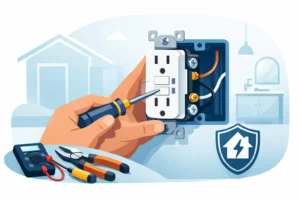
Do not try to solve a warm outlet by replacing it with a heavier-duty extension cord or power strip. Extension cords are temporary tools, not permanent wiring. A proper repair may involve replacing the damaged device, correcting the connection, and adding a circuit where the room’s electrical demand calls for one.
4. You rely on power strips and extension cords every day
One power strip behind a desk is not automatically a problem. A chain of power strips, extension cords under rugs, and adapters plugged into every available outlet is different. It usually means the room does not have enough outlets or enough circuit capacity for how it is being used.
This comes up often in converted garages, home offices, workshops, media rooms, rental properties, and commercial spaces that have grown over time. A room that once held a lamp may now support multiple monitors, chargers, printers, networking equipment, and a portable heater. The electrical layout needs to match the actual use of the space.
Avoid daisy-chaining power strips or plugging a power strip into an extension cord. High-wattage items such as space heaters, toaster ovens, air fryers, microwaves, coffee makers, and window AC units should generally be plugged directly into a properly rated wall outlet. If there is no practical outlet available, that is a reason to install one, not a reason to add another adapter.
5. You smell burning or hear buzzing from outlets or the panel
A burning odor, buzzing sound, crackling outlet, or sparking plug is an urgent warning. Overloaded circuits can create heat, but these symptoms may also indicate arcing or a failing connection. Either way, the safe response is to stop using the affected circuit.
If you can do so without touching damaged equipment, turn off the breaker that controls the area. Do not remove the panel cover, touch exposed wiring, or keep testing the outlet to see whether the problem returns. If there is smoke, visible sparking, or an active fire risk, leave the area and call 911.
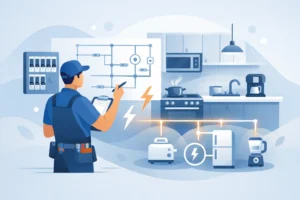
For a non-emergency concern, schedule a licensed electrician promptly. The electrician should inspect the circuit load, breaker condition, outlet connections, wire size, and the equipment plugged into that circuit. A real diagnosis identifies the cause and prevents a temporary fix from becoming an expensive repeat problem.
Why Overloads Are More Common Than Homeowners Think
Electrical demand has changed faster than many homes have. A panel that was adequate when a house was built may now serve upgraded kitchen appliances, additional refrigeration, outdoor lighting, pool systems, smart-home devices, a workshop, and an EV charger. Even newer homes can develop overloaded circuits when additions, remodels, or equipment changes are not matched with the right electrical work.
Commercial properties face a similar issue. A retail counter gains equipment, an office adds workstations, or a tenant changes how a suite is used. The existing circuits may still function most of the time, but repeated trips and hot receptacles are not normal operating conditions. They are signs the electrical system should be reviewed before downtime affects customers or staff.
The panel itself is only one part of the picture. A panel upgrade may be the right long-term solution if the service lacks capacity, has no room for new circuits, or contains outdated equipment. But if the service has adequate capacity, a dedicated circuit for a specific appliance or a targeted wiring repair may be the smarter, more cost-effective answer. Straight answers matter here because no one needs an oversized project sold as a cure for a single bad connection.
What to Do Before an Electrician Arrives
Make a quick note of what was running when the breaker tripped or the lights dimmed. Include the room, the affected outlets, and whether the problem started after installing new equipment. That information can shorten the diagnostic process.
You can also unplug nonessential devices from the affected circuit and avoid using high-demand appliances there until the issue is checked. Do not repeatedly reset a breaker, bypass a tripped breaker, or replace it yourself with a larger one. Those shortcuts can hide the protection your electrical system is supposed to provide.
A licensed electrician can test the circuit, identify whether it is overloaded or faulty, explain the repair options, and provide pricing before work begins. At VoltIQ Electrical Contractor, that means you get direct communication with the local team, no surprise charges, and work planned around the actual condition of your home or business.
If an outlet is hot, a breaker keeps tripping, or lights are acting differently when appliances run, trust what the system is telling you. Getting it checked early is usually simpler, safer, and less disruptive than waiting for the next outage.