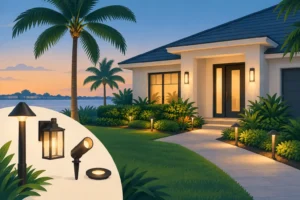
A dark front walk, a shadowy side yard, and a bright fixture blasting into a neighbor’s window are three different problems – and they need three different lighting solutions. Knowing how to choose outdoor lighting starts with deciding what each area needs to do: help people walk safely, discourage unwanted visitors, make outdoor living more usable, or show off the home without wasting energy.
For Central Florida homeowners, the fixture itself matters just as much as the look. Heat, humidity, driving rain, lawn irrigation, and salt air in some areas can ruin poorly rated lighting faster than expected. The goal is simple: lighting that looks right, works when you need it, and holds up without constant replacement.
Start With What You Need the Light to Do
Do not begin by picking a style from a catalog. Walk around the property after sunset and identify the areas that are hard to use or hard to see. Most outdoor lighting falls into four practical jobs: security, safety, task lighting, and accent lighting.
Security lighting covers entries, driveways, gates, and darker sides of the home. It should make activity visible without turning the yard into a stadium. Safety lighting helps people see steps, changes in elevation, pathways, pool decks, and door thresholds. Task lighting is more focused, such as light over a grill, outdoor kitchen, work area, or garage side door. Accent lighting adds curb appeal by highlighting landscaping, architectural features, trees, or a patio wall.
One fixture rarely handles all four jobs well. A large floodlight may help with driveway visibility, but it can create glare around a front door. Decorative wall sconces may look great at an entry but may not provide enough light for a long walkway. Build the plan around the activity, then choose fixtures that fit the space.
How to Choose Outdoor Lighting by Location
Every part of the property has different mounting heights, exposure to weather, and brightness needs. Choosing by location prevents the common mistake of installing the same fixture everywhere.
Front Entry and Porch
Your front door should be easy to find, easy to unlock, and welcoming for guests. Wall-mounted lanterns or sconces on both sides of the door often provide the most balanced look. If there is only room for one fixture, mount it high enough to light faces and the lock without putting the bulb directly at eye level.
For many homes, warm white light around 2700K to 3000K feels more inviting than a harsh blue-white lamp. A covered porch gives you more fixture options, but rain can still blow in. Use a fixture rated for damp or wet locations based on how exposed it is.
Driveways, Garages, and Side Yards
These areas usually need practical visibility first. Motion-activated floodlights can work well over a driveway, near a garage, or at a side gate. Place them carefully so they illuminate the area you use, not the bedroom window next door or every passing car on the street.
A garage often benefits from decorative fixtures beside the doors plus a separate motion light for the driveway or side access. That combination gives you dependable everyday lighting without leaving a high-output floodlight on all night.
Walkways, Steps, and Pool Areas
Low-level path lights, step lights, and downlighting are usually better than tall, glaring fixtures. The purpose is to reveal where feet need to go. You should be able to see a change in level, the edge of a path, and obstacles without seeing a bare bright bulb.
Pool and spa areas need extra care. Water and electricity are not a do-it-yourself combination. Equipment, wiring methods, fixture placement, bonding, and GFCI protection may be governed by code requirements. If lighting is going near a pool, dock, fountain, or other water feature, have a licensed electrician plan the work.
Patios, Outdoor Kitchens, and Seating Areas
Outdoor living spaces need layers of light. A bright security fixture alone makes a patio feel exposed and uncomfortable. Use general lighting for the overall area, focused task lighting at the grill or prep counter, and softer lighting for dining or seating.
Dimmable fixtures are especially useful here. You may want full brightness while cooking, then lower light when guests are sitting outside. If you are adding a ceiling fan, recessed lights, pendants, or permanent outdoor kitchen lighting, make sure the existing circuit can safely support the load.
Choose the Right Brightness, Not the Brightest Fixture
More lumens are not automatically better. Too much light creates glare, hard shadows, and wasted energy. It can also make it harder for your eyes to adjust to darker areas beyond the fixture’s reach.
For a typical entry fixture, moderate output is often enough. Driveways and larger side yards may need more, especially where there are gates, trash bins, or service access. The exact number depends on fixture height, beam angle, surrounding surfaces, and how much nearby ambient light already exists.
Instead of chasing the highest lumen rating, think about coverage. A lower-output fixture pointed correctly can be more useful than an oversized floodlight aimed across the whole yard. Shielded fixtures and downward-facing light generally reduce glare while keeping the ground visible.
Color temperature matters too. Warm white light, generally 2700K to 3000K, works well at doors, patios, and landscape features. Neutral white around 3500K to 4000K can provide a crisper look for garages, work areas, and security lighting. Avoid mixing several noticeably different colors around the same home unless there is a clear reason to do it.
Pay Attention to Weather Ratings and Materials
Central Florida weather is hard on outdoor electrical equipment. A fixture under a deep covered porch does not face the same conditions as one mounted on an open fence, tree, garage wall, or pool enclosure.
Check whether the fixture is rated for damp locations or wet locations. Damp-rated fixtures are designed for covered spaces where moisture may be present but direct rain is limited. Wet-rated fixtures are built for direct exposure to rain and weather. Use wet-rated equipment anywhere rain can reach it. It is a small detail that prevents corrosion, water intrusion, nuisance tripping, and early failure.
Material choice also affects how long the fixture will look good. Powder-coated aluminum, quality stainless steel, brass, and durable composite materials can perform well, but even good materials need to match the environment. Coastal conditions, sprinkler overspray, and fertilizer can accelerate corrosion. A bargain fixture may cost less on day one and look worn out after a few seasons.
Decide How You Want to Control It
The best outdoor lighting plan is one you will actually use. Manual switches are fine for a simple porch light, but timers, photocells, motion sensors, smart controls, and dimmers can make the system more useful while reducing unnecessary run time.
Photocells turn lights on at dusk and off at dawn. They work well for front entries, address lights, and path lighting. Timers are useful when you want lights on during a set evening window. Motion sensors are practical for side yards, driveways, and service entrances. Smart controls can be helpful if you want schedules, vacation settings, or phone control, but they still need proper installation and a reliable electrical setup.
Do not assume every LED fixture works with every dimmer, timer, or smart switch. Compatibility matters. A mismatched control can cause flickering, humming, shortened fixture life, or lights that will not turn fully off.
Plan for Wiring, Power, and Code Requirements
Plug-in lights and solar path fixtures have their place, but permanent outdoor lighting needs more than a good-looking fixture. Exterior circuits may need GFCI protection, weatherproof boxes, correct covers, proper burial depth for underground wiring, and connections rated for the location. Older homes may also have overloaded circuits, damaged exterior boxes, or wiring that was never intended to support new lighting.
This is where a licensed electrician saves time and avoids expensive rework. A proper installation looks clean, operates safely, and gives you a plan for future additions such as landscape lighting, a gate, a camera, or an outdoor kitchen. VoltIQ Electrical Contractor can assess the existing setup, explain the options in plain language, and provide upfront pricing before work starts. No surprise charges, no runaround.
Make Curb Appeal Work With Safety
Outdoor lighting should support the architecture of the home, not compete with it. Match fixture scale to the size of the door, garage, columns, or wall area. Small fixtures can disappear on a large facade, while oversized lanterns can overwhelm a narrow entry.
Before buying several fixtures, test the plan. Turn on the porch light, stand at the curb, walk the path, unlock the door, and sit in the patio area. Look for dark gaps, glare, and fixtures that shine into windows. A good design feels easy because people can move around safely without noticing the lighting system doing all the work.
If your outdoor lights are dim, corroded, constantly tripping, or simply not doing their job, do not keep replacing bulbs and hoping for a better result. A clear on-site assessment can turn a patchwork setup into lighting that makes your property safer, more comfortable, and easier to enjoy after dark.