A wall outlet should be the least dramatic part of your home or business. Plug something in, it works, and you move on. If an outlet feels loose, gets hot, sparks, stops holding plugs, or trips power repeatedly, that small device may be telling you something bigger. If you are asking when should outlets be replaced, the answer is usually not based on age alone. It is based on condition, safety, and whether the outlet still meets the demands of the space.
Outlets are inexpensive components, but the wiring and connections behind them are not a DIY guessing game. A licensed electrician can determine whether you need a straightforward receptacle replacement or whether the outlet is exposing a wiring, circuit, grounding, or panel issue. Straight answers, no drama.
The warning signs that mean an outlet needs attention
A damaged outlet does not always fail completely. In many cases, it continues working just enough to be ignored. That is why homeowners and property managers should pay attention to changes in how an outlet looks, feels, or performs.
1. Plugs fall out or fit loosely
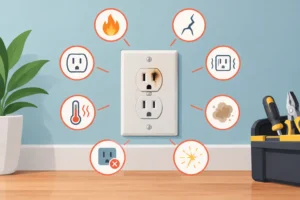
A plug should sit firmly in an outlet. If phone chargers, lamps, appliances, or power strips sag, slide out, or lose power when bumped, the internal contacts may be worn out. Those contacts are designed to grip the plug blades securely. Once they lose tension, the connection can become unreliable and may create heat or arcing.
This is one of the most common reasons to replace an outlet, especially in high-use locations such as kitchens, living rooms, offices, rental units, and commercial work areas.
2. The outlet is warm, discolored, cracked, or smells burnt
An outlet should not feel warm during normal use. A hot faceplate, brown or black discoloration, melted plastic, crackling sound, or burnt odor calls for immediate attention. Stop using the outlet and unplug anything connected to it if you can do so safely.
Heat can come from a loose connection, a damaged outlet, overloading, or a problem farther back on the circuit. Replacing the outlet may be part of the repair, but the cause needs to be checked. Simply installing a new receptacle over a failing connection is not a permanent fix.
3. It sparks when you plug something in
A tiny, brief blue spark can occur when a device is switched on as it is plugged in. That does not automatically mean the outlet is defective. But frequent sparking, large sparks, yellow or orange sparks, smoke, or a popping sound are different. Those signs can indicate arcing or damaged electrical connections.
Do not keep testing it to see whether it happens again. Have the outlet and circuit inspected before putting it back into service.
4. The outlet has no power or works only sometimes
A dead outlet may have a simple cause, such as a tripped breaker or a GFCI outlet elsewhere that needs resetting. It may also point to a loose wire, failed receptacle, damaged circuit, or overloaded connection.
Intermittent power deserves the same attention. If a lamp flickers when a plug moves, or an outlet works one day and not the next, do not assume it is just old. Electrical problems do not usually improve with more use.
5. Breakers trip when you use that outlet
A breaker is there to protect the wiring. If it trips after you plug in a specific appliance, the appliance could be faulty or it could be drawing more power than the circuit can safely handle. If it trips when using several items in the same area, the circuit may be overloaded.
A worn outlet itself can also contribute to problems, but it is rarely wise to assume the outlet is the only issue. An electrician should identify whether the fix is a new outlet, a dedicated circuit, circuit repair, or an upgrade to support the equipment you are using.
6. It is in a wet area without GFCI protection
Ground-fault circuit interrupter, or GFCI, protection is designed to shut off power quickly when it detects a ground fault. These outlets are commonly needed in bathrooms, kitchens, garages, laundry areas, outdoors, pool-related locations, and other places where water is present.
Older homes and older commercial spaces may still have standard outlets in locations where GFCI protection is expected today. That does not always mean every outlet needs replacement immediately, but it is a strong reason to schedule an electrical safety review. Central Florida humidity, outdoor living spaces, garages, and pool equipment areas make this especially relevant.
7. The outlet is two-prong or ungrounded
Two-slot outlets are common in older properties. They may still provide power, but they do not provide the grounding protection used by modern three-prong appliances and electronics. Using a simple three-prong adapter does not create a safe ground.
There are compliant ways to improve protection, depending on the existing wiring and the circuit condition. Options may include GFCI protection, properly grounded rewiring, or circuit upgrades. The right choice depends on what is actually behind the wall, not what looks easiest from the room.
8. You rely on extension cords and power strips every day
Power strips are useful for temporary convenience and low-load electronics. They are not a substitute for enough properly located outlets. If you regularly run extension cords across floors, daisy-chain power strips, or plug heaters, microwaves, refrigerators, office equipment, or window AC units into overloaded strips, your space may need additional circuits or outlets.
Replacing a worn outlet helps, but adding outlets without checking circuit capacity can just move the problem. A good electrical plan considers what you use, where you use it, and what the circuit can safely carry.
When should outlets be replaced because of age?
There is no fixed expiration date for every outlet. A quality outlet in a low-use bedroom can last many years. An outlet used daily for vacuums, kitchen appliances, chargers, tools, or office equipment may wear faster.
Age becomes more relevant when outlets are part of a larger update. If you are remodeling, replacing old wiring, upgrading a panel, adding an EV charger, or bringing a rental property up to current safety expectations, it makes sense to inspect and update receptacles at the same time. This can prevent the frustration of finishing a renovation only to find that outlets are loose, ungrounded, poorly placed, or not protected where they should be.
For businesses, outlet replacement is often driven by operations rather than appearance. Loose receptacles at workstations, damaged outlets in customer areas, insufficient power for equipment, and recurring breaker trips can interrupt work and create avoidable liability. A planned repair is usually less disruptive than waiting for a failure during business hours.
Replacement is not always the whole repair
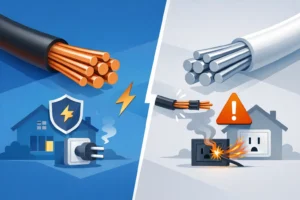
This is where experience matters. A bad outlet may be the problem, but it may also be the symptom. Loose connections can occur in the outlet box, at another outlet on the same circuit, in a junction box, or at the electrical panel. Older aluminum wiring, incorrect past repairs, overloaded circuits, moisture intrusion, and damaged wiring can all affect outlet performance.
A proper diagnosis includes testing the receptacle, checking polarity and grounding, inspecting connections, and evaluating the circuit load when needed. If the outlet is simply worn, replacement is quick. If the circuit has a deeper issue, you deserve to know that before anyone starts work. No surprise charges and no temporary patch presented as a permanent solution.
What to do if an outlet seems unsafe
If you notice heat, smoke, burning smell, visible damage, repeated sparking, or a buzzing sound, stop using the outlet. Turn off the breaker if you can identify it safely, and keep people away from the area. Do not cover the outlet, spray it with anything, or continue plugging items in to test it.
For a dead, loose, outdated, or inconvenient outlet, schedule an evaluation before the problem becomes urgent. VoltIQ Electrical Contractor can inspect the outlet, explain what is causing the issue, and provide upfront pricing before work begins. You are dealing with a local team, not a call center.
Your outlets should quietly do their job. When one starts demanding attention, listening early is usually the safest and least expensive move.